
Fluidized bed airflow mill
Fluidized bed airflow mill is currently the most advanced technology forFrom micrometer to submicron scaleThe dry crushing technology of particles can usually reach a particle size range of 0.5 microns to 50 microns. In this type of air flow mill, an air flow with pressure and temperature is introduced into the grinding chamber, which drives the high-speed movement of raw material particles and generates collisions between particles, thereby producing a crushing effect to reduce particle size. Based on this mechanism, there is no collision between particles and any mechanical components in the crushing process of fluidized bed airflow mill, effectively avoiding mechanical component wear and subsequent product pollution caused by particle and mechanical component collision in other crushing processes. In addition, the fluidized bed airflow mill is equipped with a dynamic air classification wheel, and users can flexibly and quickly obtain products of different particle sizes by adjusting the speed of the classification wheel.
Fluidized bed airflow mill
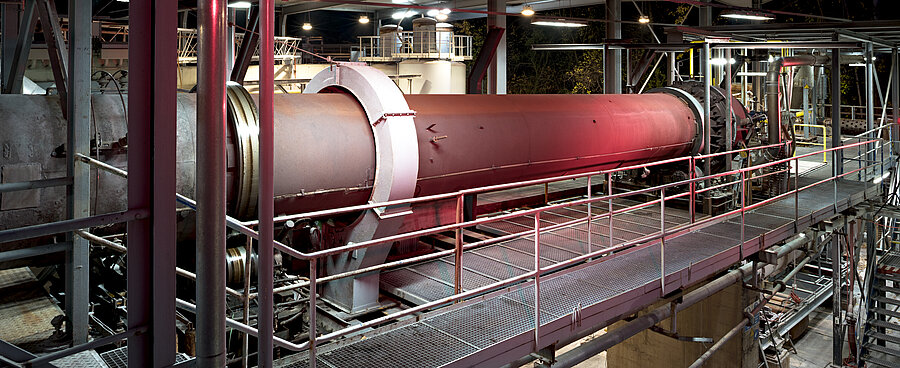
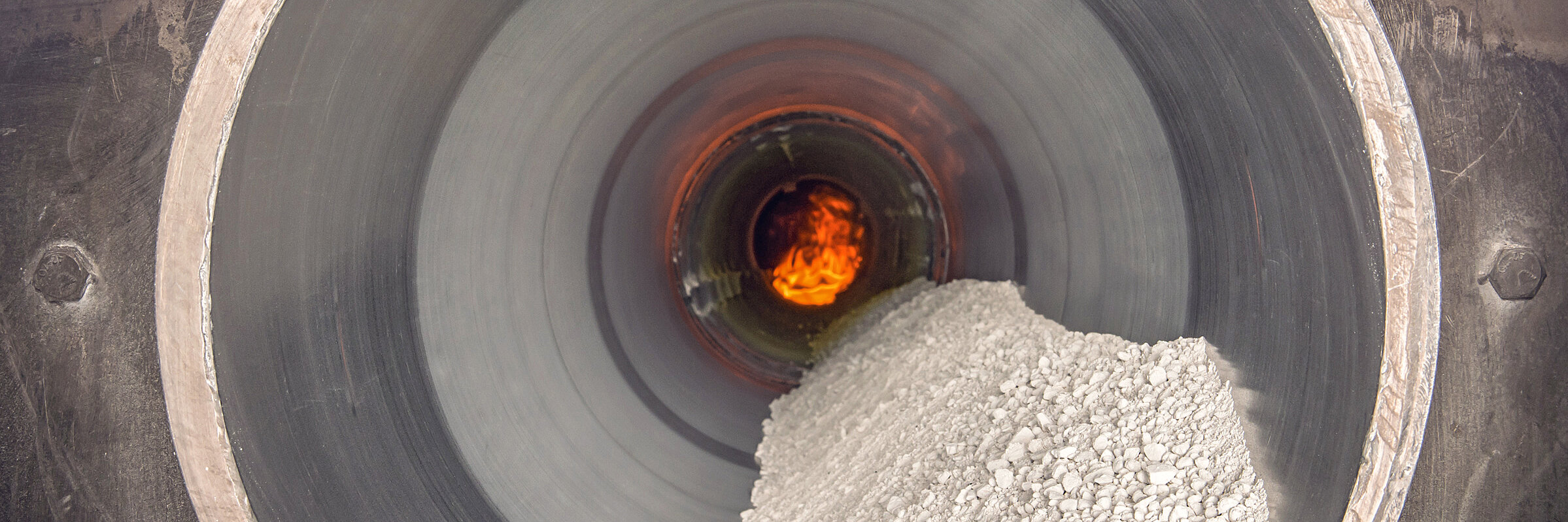
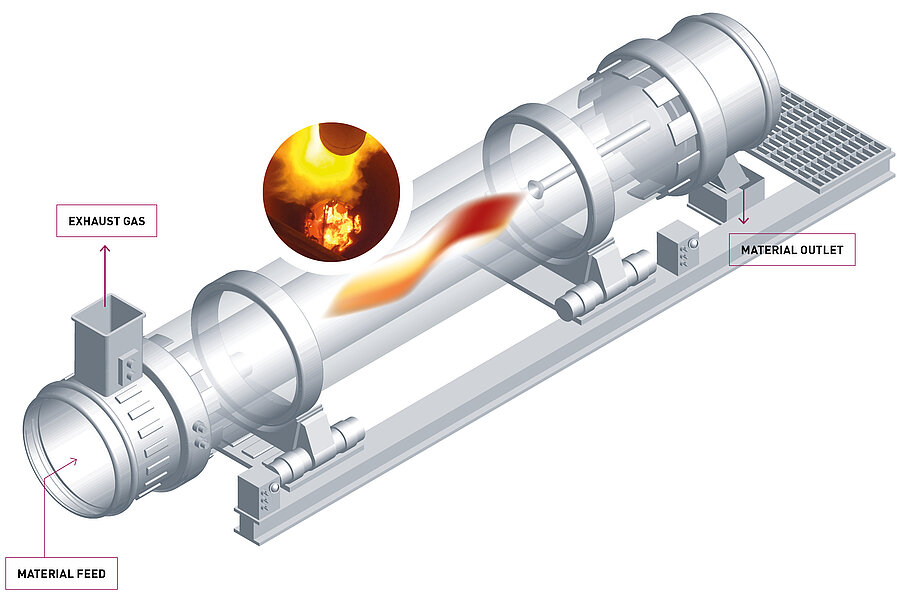
In a direct-fired rotary kiln, the burner is situated inside the kiln body, that is, inside the reaction chamber. The material is heated directly by the burner flame and the stream of hot gas produced by the burner. These kilns are usually lined with refractory (heat-resistant) material so that they can be operated at higher temperatures than kilns with plain metal tubes. Directly fired kilns are highly robust and easily scalable and can be used to achieve high throughput rates with relatively low production costs.
Facts & Data
- 4 direct heated rotary kilns
- Temperature range: 100 – 1,550°C
- Residence time: 15 – 180 minutes
- Reaction modes: continuous, batch, co-current, counter-current
- Typical Processes: calcination , sintering , reduction , oxidation and drying
| Kiln name | Heated kiln length [m] | Inner diameter [m] | Temperature range [°C] | Raw material throughput [kg/h] | Mode of operation | Special features | Heating type |
|---|---|---|---|---|---|---|---|
| GD0 | 12 | 1 | up to 1,500 | 150 – 1,500 | counter-current (co-current) | raw material silo, 10 m rotary cooler, cyclone preheater | natural gas |
| MD0 | 4 | 0.6 | up to 1,250 | 50 – 500 | counter-current | rotary cooler, cyclone preheater | natural gas |
| KD0 | 7 | 0.3 | up to 1,550 | 10 – 100 | counter-current or co-current | vibration cooler, rotary cooler, reducing gas atmosphere possible, afterburner | natural gas |
| BD0 | 0.6 | 0.35 | up to 1,000 | 15 l per batch | batch operation only | batch kiln for small quantities | natural gas |
IBU-tec Fact Sheet Directly Fired Rotary Kilns
DownloadIndirect Fired Rotary Kilns
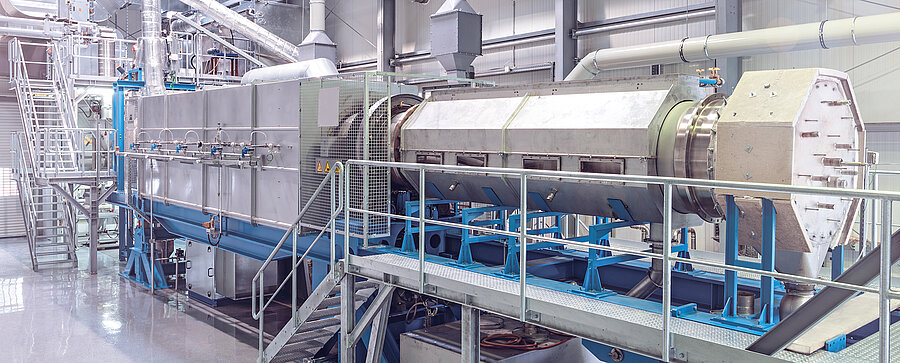
In contrast to directly fired kilns, indirect fired rotary kilns (also called rotary calciners) are equipped with natural gas burners or electric heating elements located outside the reaction chamber, so that the heat is transferred to the interior through the kiln shell. This arrangement makes it easy to operate the kiln with a controlled gas atmosphere in the reaction chamber (e.g. inert or reducing). Because combustion gases are kept out of the reaction chamber, the gas volume flow in an indirectly fired kiln is generally lower than in directly fired kilns. This means the indirect rotary kilns are excellent for treatment of very fine powders. They are also easier to clean, so that cross-contamination of materials can be more effectively prevented.